
Julian Date Calendar (+ 5 Printable Templates)
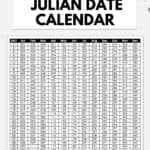
If you’ve ever looked at a number like 245 or 25060 on a label and thought, “What date is that supposed to be?” — you’re not alone.
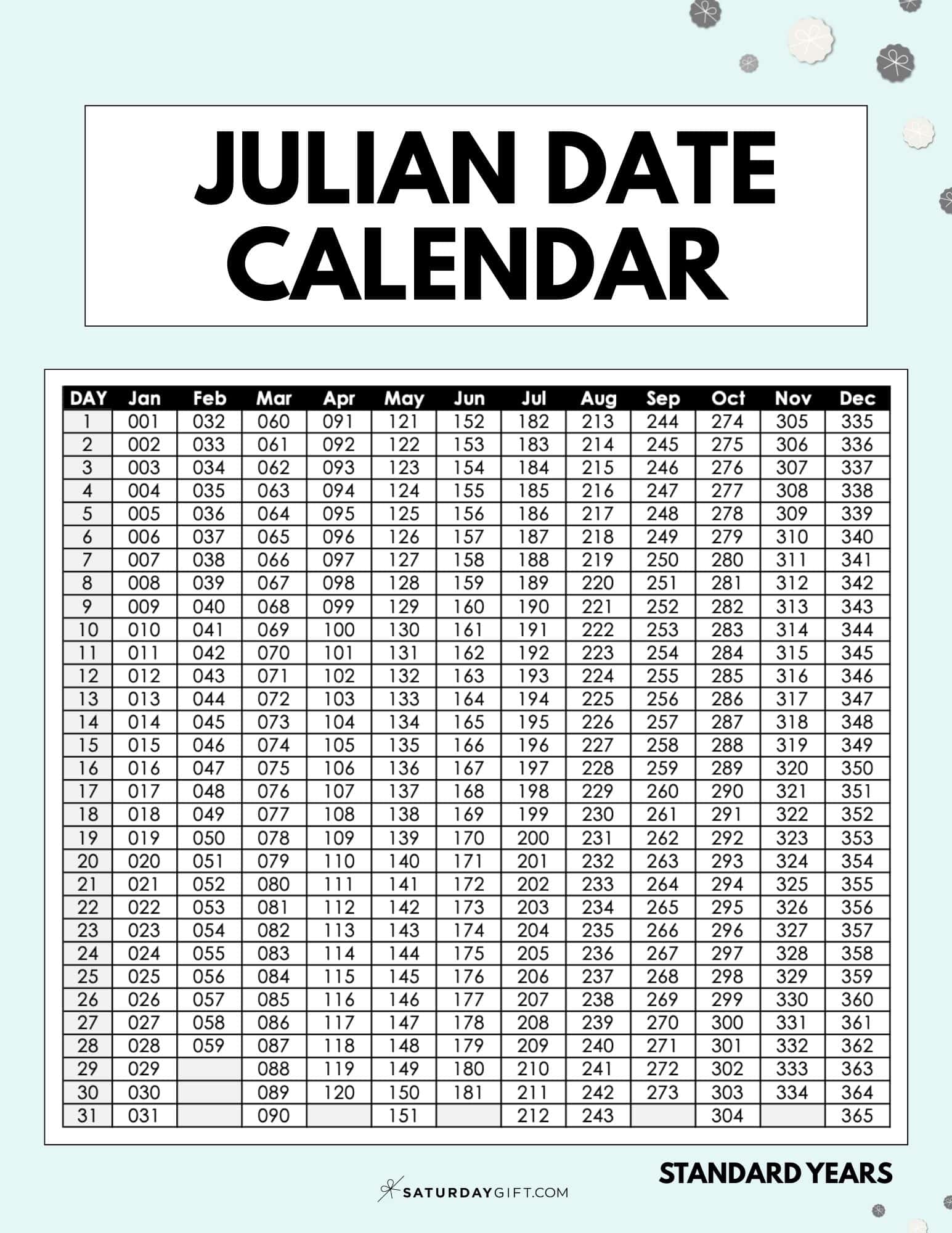
A Julian Date Calendar makes those codes instantly understandable by showing each day of the year as a simple number from 001 to 365 (or **001 to 366 in leap years). Instead of counting days on a calendar or doing mental math, you can just look it up and move on with your day.
On this page, you’ll find free printable Julian date calendars that pair regular calendar dates with their corresponding Julian day numbers — perfect for work, planning, production tracking, or anywhere dates need to be quick, clear, and unambiguous.
Free Printable Julian Date Calendars (001–365 / 001–366)
This is the heart of the page — where you can grab your free printable Julian date calendars and put them to work immediately.
Whether you’re managing inventory, checking production dates, planning projects, or just want a clearer way to track days throughout the year, these calendars make it simple and visual — no counting required.
Julian Date Calendar – Standard Years (001 to 365)
Download Julian Date Calendar (PDF) – Ideal for current-year tracking of shelf life, inventory rotation, and project milestones.
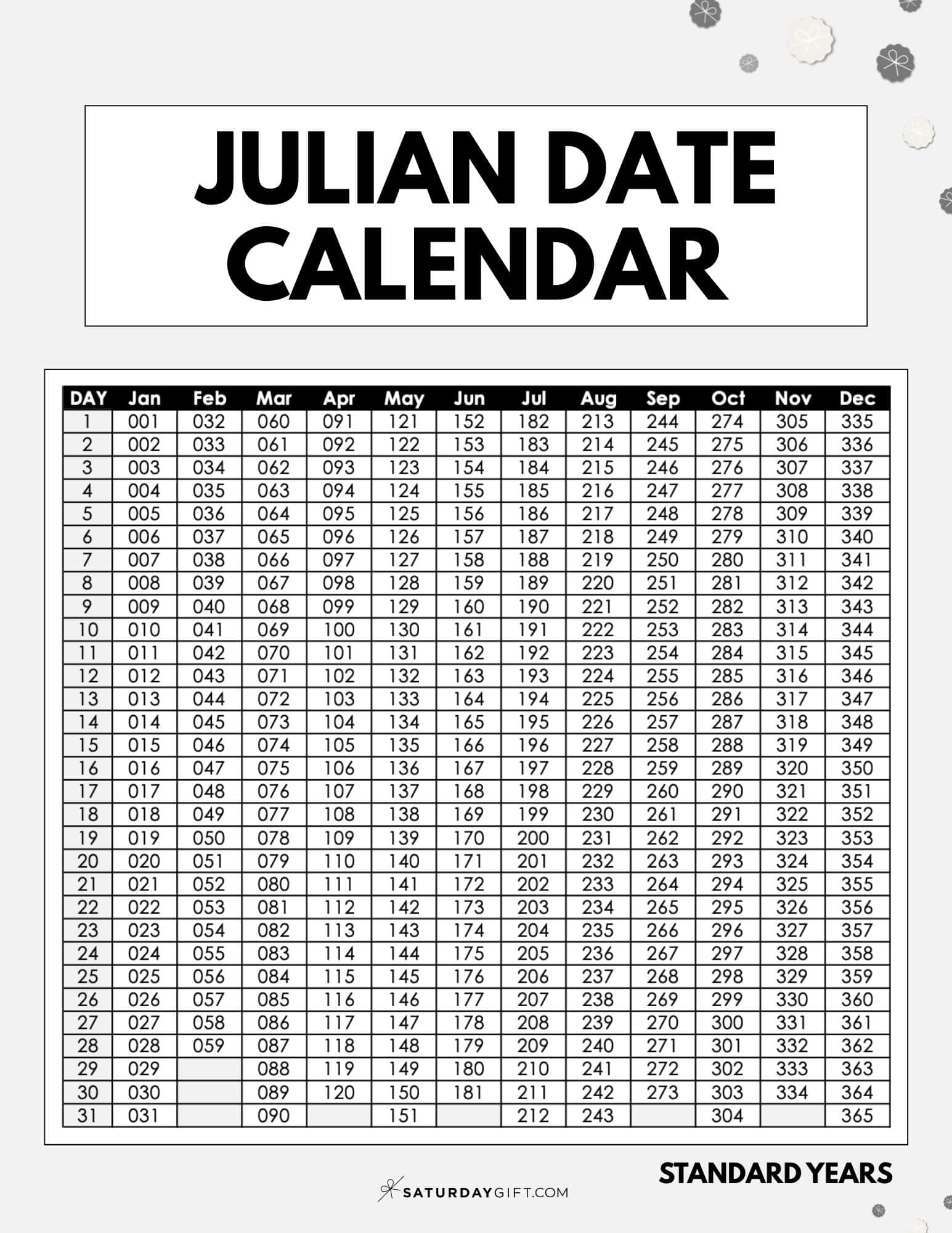
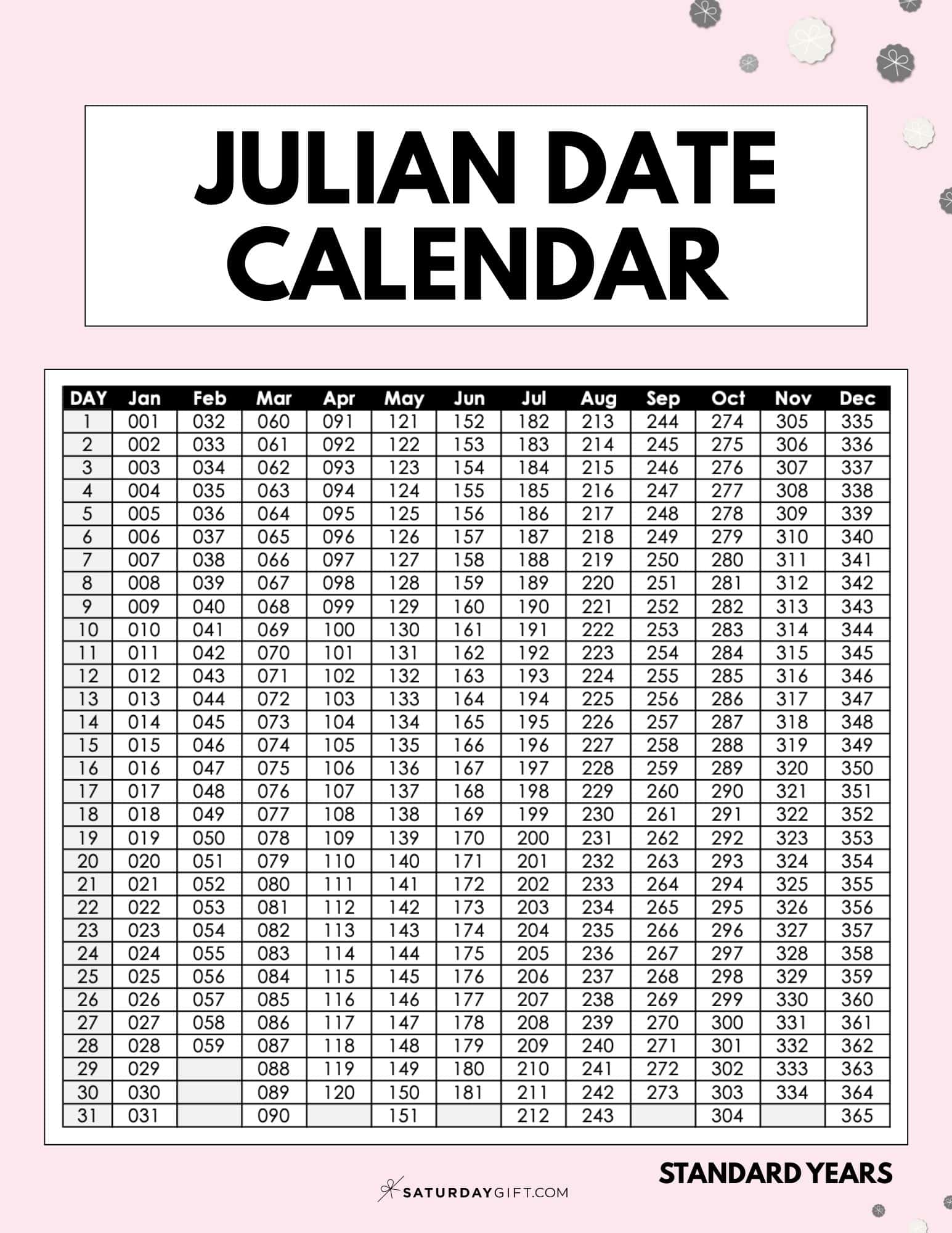
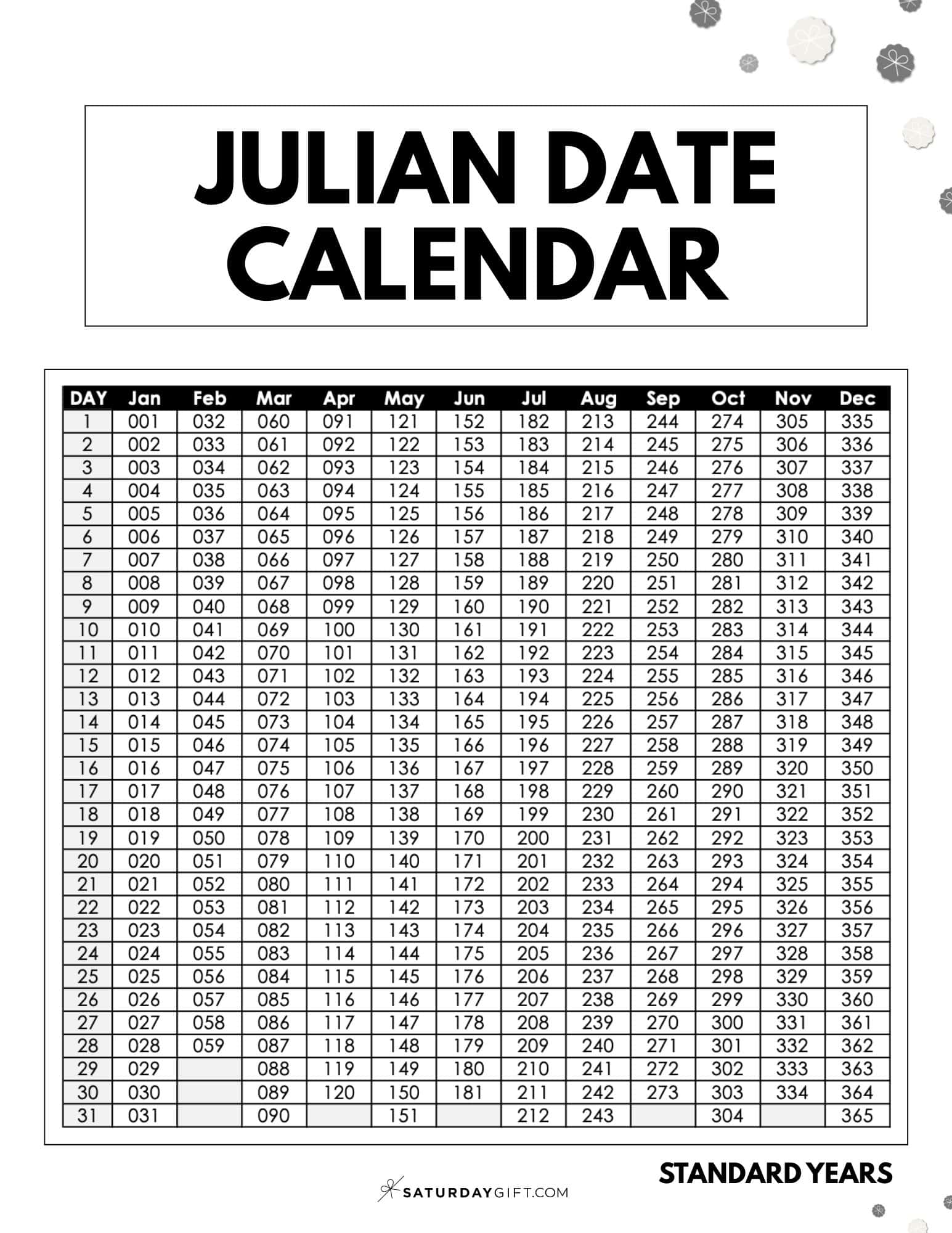
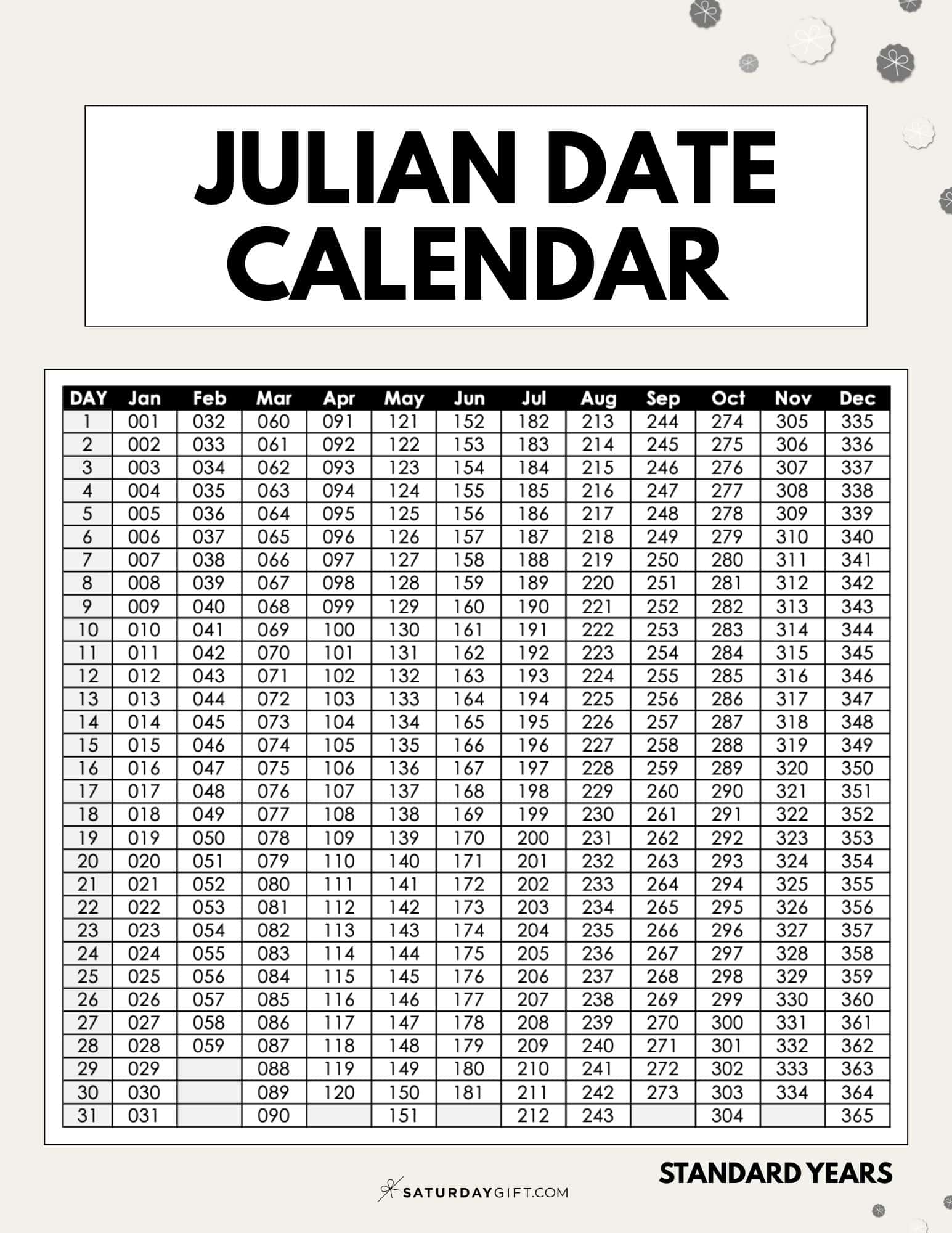
DOWNLOAD: Julian Date Calendars (Standard Years) – 5 colors
These calendars cover a standard 365-day year. January 1 is 001, December 31 is 365, and February ends on day 059.
Julian Date Calendar – Leap Years (001 to 366)
Download Julian Date Calendar (PDF) for Leap Years – Great for production facilities that need to reference last year’s batch codes and expiration tracking.
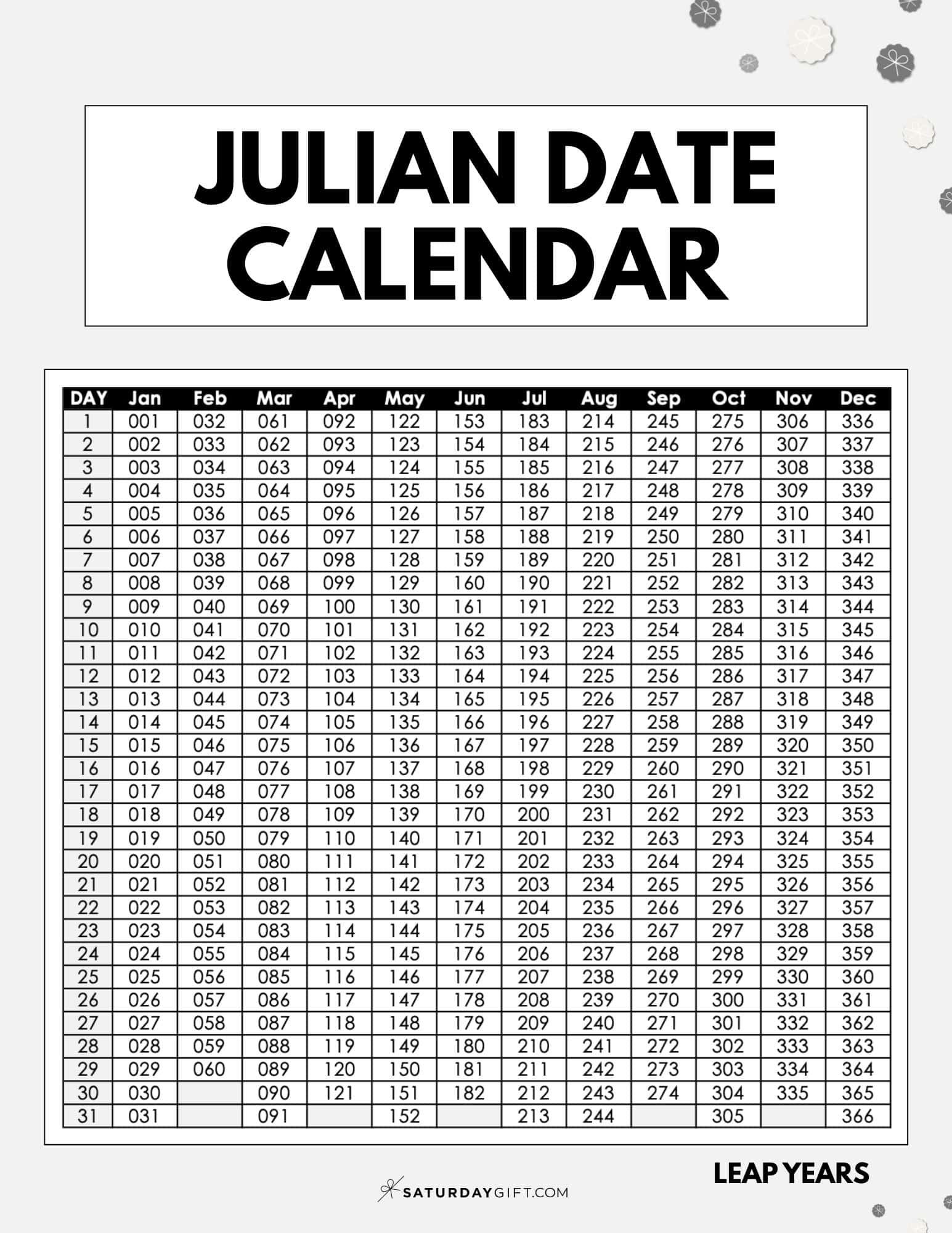
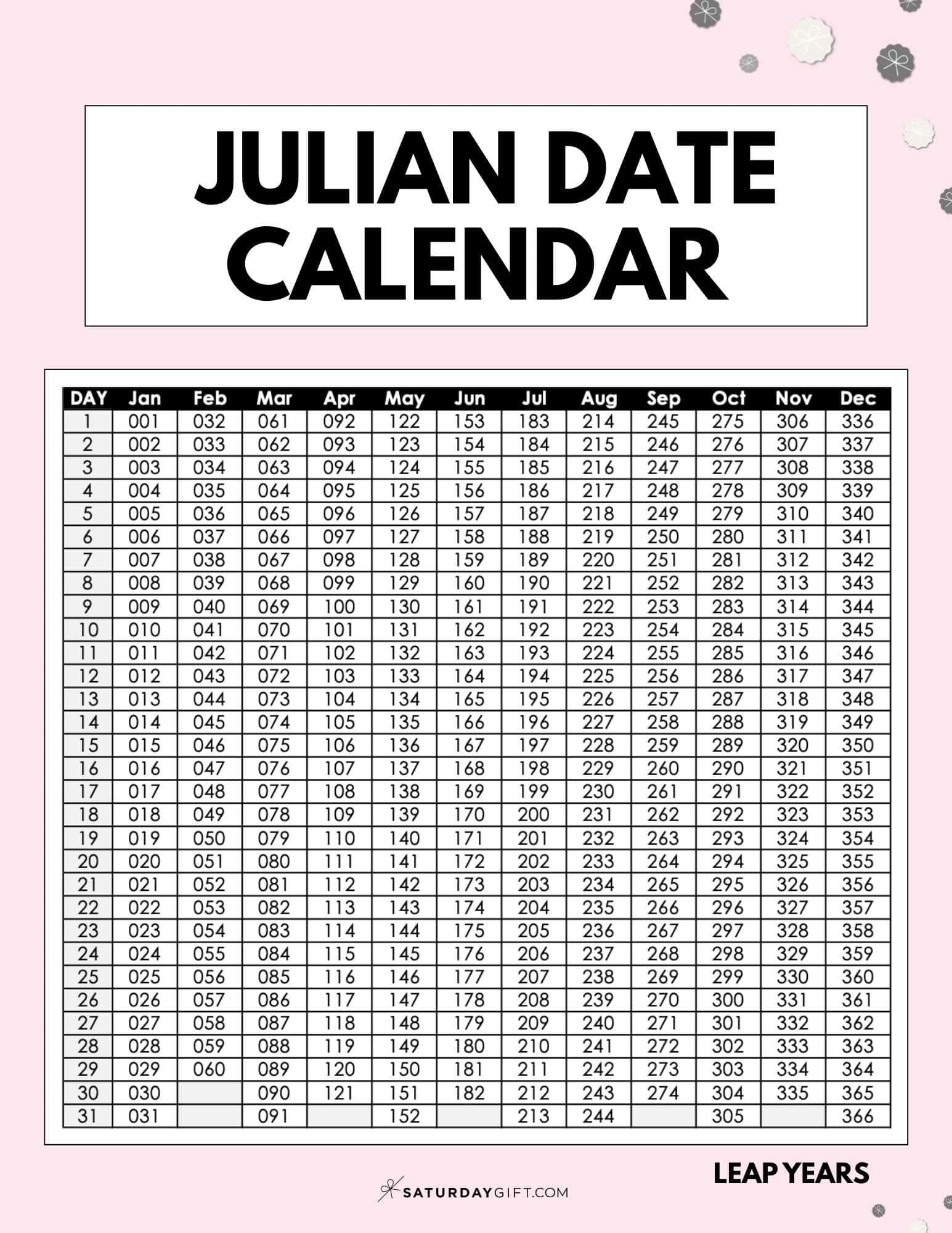
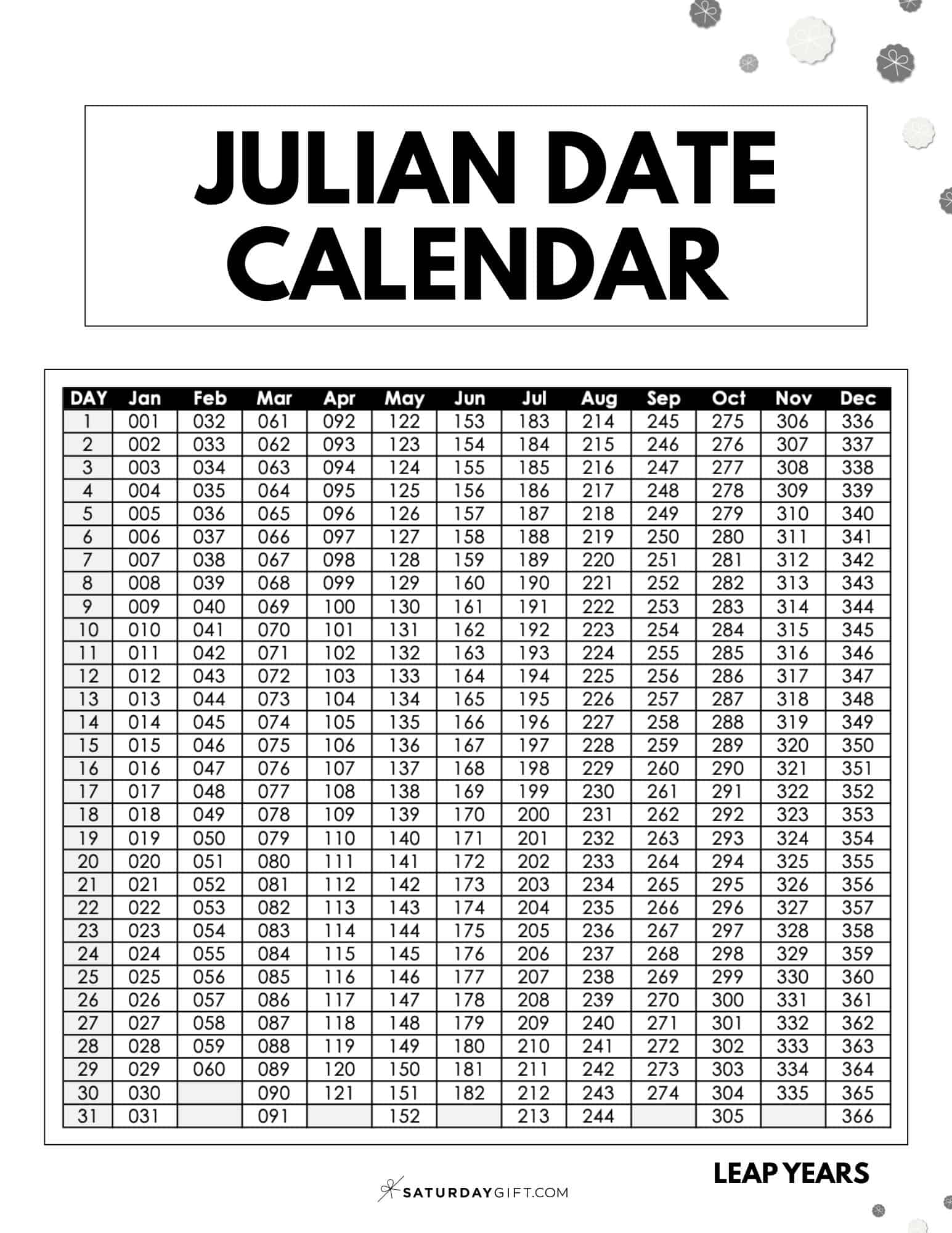
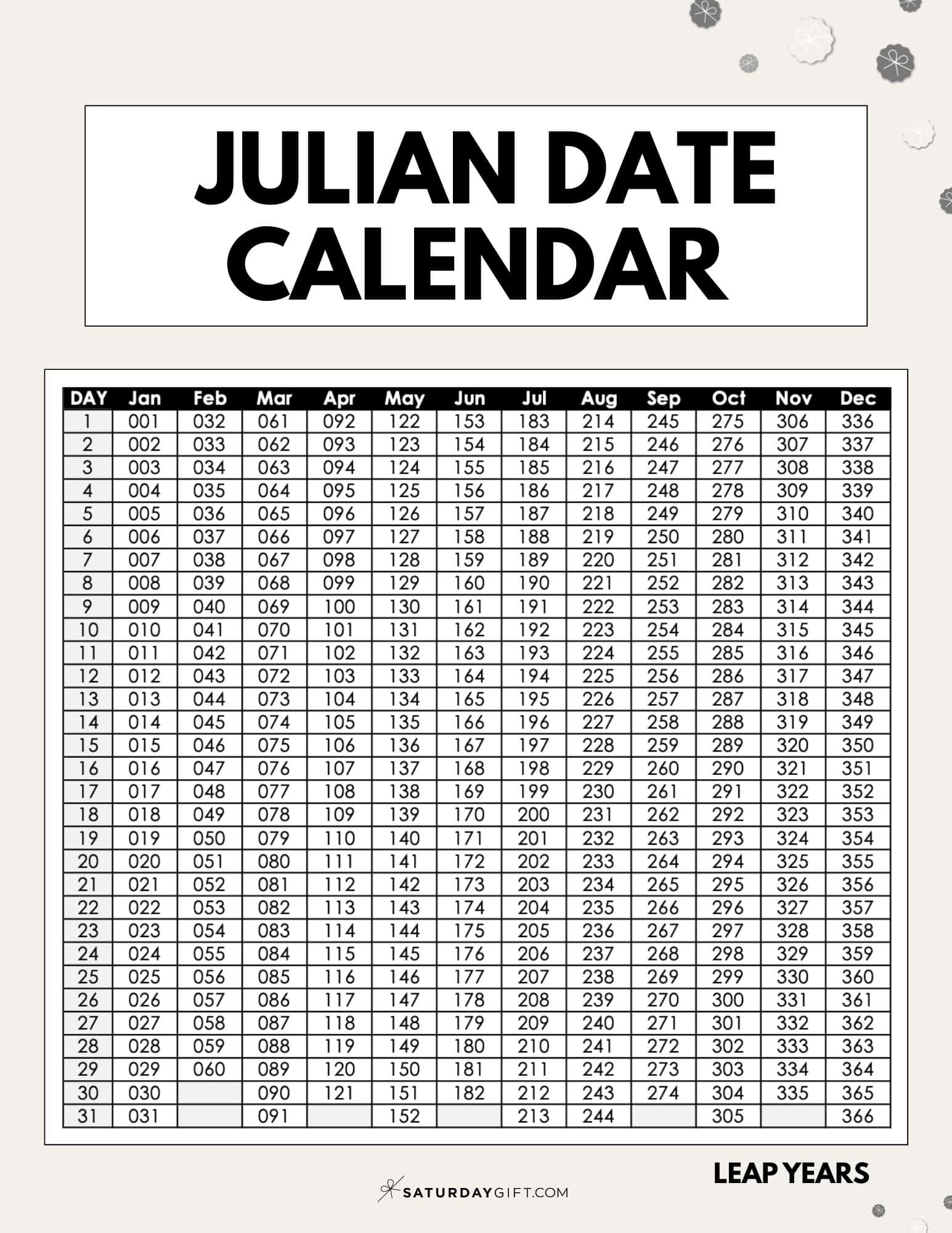
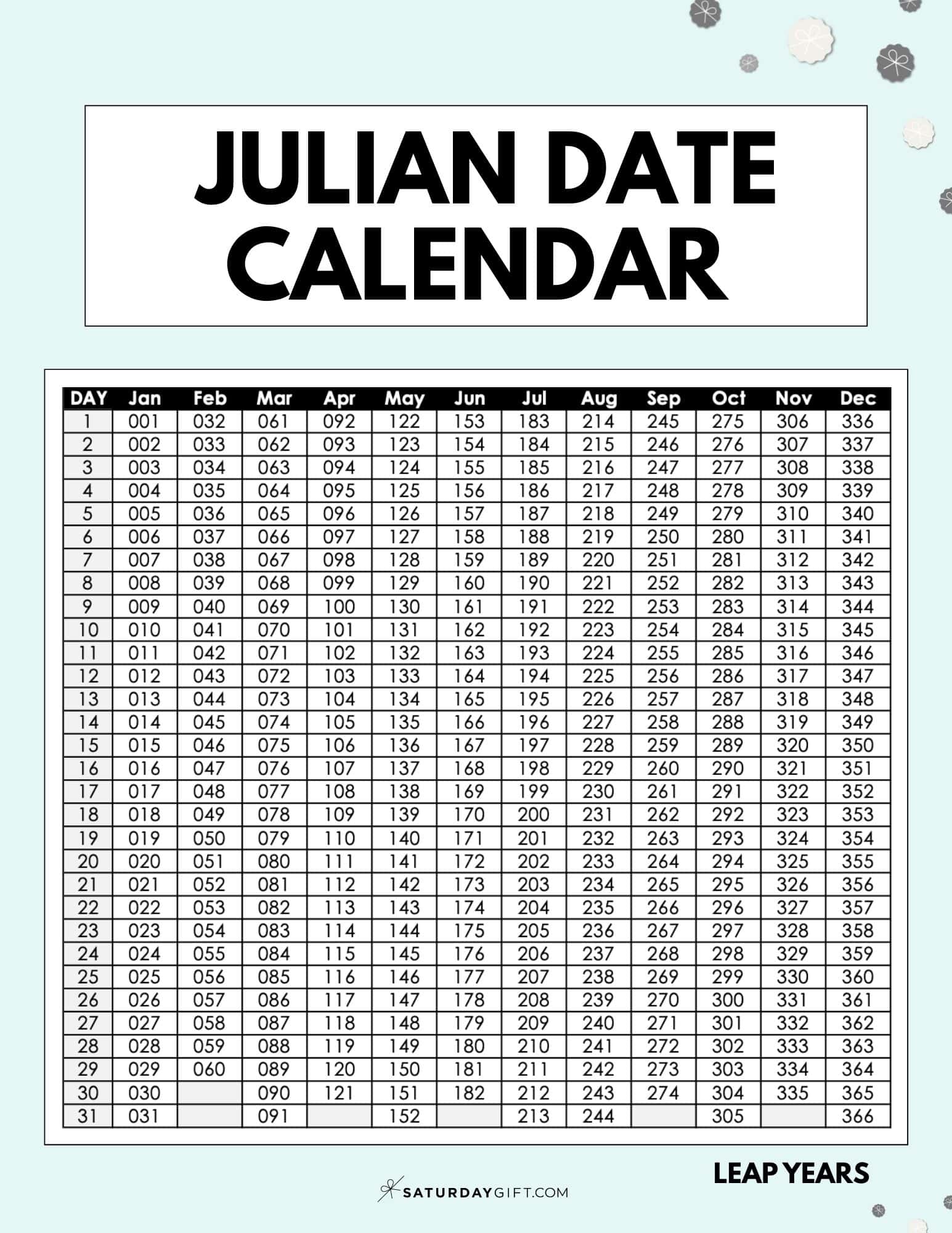
DOWNLOAD: Julian Date Calendars (Leap Years) – 5 colors
This calendar runs from day 001 (January 1) all the way through day 366 (December 31). February includes day 060 for February 29, with all subsequent dates shifted accordingly.
If you love simple tools that make everyday planning easier, you’re in the right place. I hope these Julian Date Calendars save you time, reduce confusion, and make date tracking just a little more effortless
Key Takeaways
- This page includes free printable Julian Date Calendars for standard years and leap years, with days numbered 001–365(or 001–366 in leap years like 2028).
- Each calendar shows standard Gregorian dates alongside Julian day-of-year numbers, a format commonly used in food packaging, manufacturing, military logistics, and inventory systems.
- The printable PDFs are ideal for tracking production dates, expiration codes, shelf life, batch numbers, and long-term projects where simple sequential numbering saves time and reduces mistakes.
- The Julian date system used here is not the historical Julian calendar introduced by Julius Caesar, and it’s also different from astronomical Julian day numbers used by scientists.
The Concept of a Julian Day
Want to understand one of history’s most brilliant time-keeping innovations? Awesome!
The concept of a Julian day is deeply rooted in the fascinating history of the Julian calendar, which was introduced by the legendary Julius Caesar to bring order to the super complicated Roman lunar calendar.
By establishing a more standardized calendar, Caesar aimed to align the calendar dates with the sun, seasons, and key astronomical events like the equinoxes and solstices.
This revolutionary reform not only simplified the process of tracking days but also set the stage for how we reference specific days in a year today.
What is a Julian date?
So what exactly is a Julian date? Great question!
A Julian date refers to a particular day of the year, typically represented in a format such as YYDDD or XX-XXX.
In this smart system, the first two digits indicate the last two digits of the year, while the following three digits represent the day number within that year.
- YY=year
- DDD = Day number
For instance, if you see the code 25088, it means the 88th day of 2025—March 29, 2025!
This approach makes it incredibly easy to track and convert calendar dates without confusion, especially when dealing with international or historical records.
RELATED POST: Current Day Number – What Day of the Year Is It?
Today, the Julian calendar lives on in several super important fields.
In astronomy, the Julian day is a continuous count of days that helps scientists track celestial events with amazing precision, free from the irregularities of monthly calendars.
The food industry relies on a modified version of the Julian calendar to mark production and expiration dates on bulk products, ensuring quality and traceability like a pro!
The military also uses Julian dates for logistics and meal tracking, such as on Meal, Ready-to-Eat (MRE) packaging, where clarity and standardization are absolutely crucial.
Even though most countries have replaced the Julian calendar with the Gregorian calendar for civil purposes, the Julian system remains incredibly valuable for specific applications!
Historians and educators often use Julian dates to explain and track historical events, as the system provides a consistent way to reference dates across centuries and cultures.
It’s like having a universal language for time!
What Is a Julian Date Calendar (Day-of-Year 001–365/366)?
A Julian date calendar is simply a Gregorian calendar that adds a day-of-year number to each specific day.
Instead of thinking “March 15,” you can also reference it as “day 074” of a non-leap year. This system creates a standardized calendar format that eliminates confusion between different date formats used around the world.
Here’s how the numbering works:
- January 1 = 001
- January 31 = 031
- February 1 = 032
- February 28 = 059
- March 1 = 060 (in a non-leap year)
- March 31 = 091(in a non-leap year)
- December 31 = 365 (or 366 in a leap year)
This modern, practical system is widely used by manufacturers, the food industry, the military, and logistics operations. It’s completely distinct from the ancient Julian calendar that was used across the Roman Empire and much of Europe for over 1,600 years.
When you see Julian dates on packaging or in documents, they often appear in formats like YYDDD or YYYYDDD.
For instance, 25001 represents January 1, 2025, while 2025030 indicates January 30, 2025. The first two or four digits show the year, and the last three digits represent the day-of-year from 001 to 365 or 366.
Julian Date Calendar – Standard Years
| DAY | Jan | Feb | Mar | Apr | May | Jun | Jul | Aug | Sep | Oct | Nov | Dec |
|---|---|---|---|---|---|---|---|---|---|---|---|---|
| 1 | 001 | 032 | 060 | 091 | 121 | 152 | 182 | 213 | 244 | 274 | 305 | 335 |
| 2 | 002 | 033 | 061 | 092 | 122 | 153 | 183 | 214 | 245 | 275 | 306 | 336 |
| 3 | 003 | 034 | 062 | 093 | 123 | 154 | 184 | 215 | 246 | 276 | 307 | 337 |
| 4 | 004 | 035 | 063 | 094 | 124 | 155 | 185 | 216 | 247 | 277 | 308 | 338 |
| 5 | 005 | 036 | 064 | 095 | 125 | 156 | 186 | 217 | 248 | 278 | 309 | 339 |
| 6 | 006 | 037 | 065 | 096 | 126 | 157 | 187 | 218 | 249 | 279 | 310 | 340 |
| 7 | 007 | 038 | 066 | 097 | 127 | 158 | 188 | 219 | 250 | 280 | 311 | 341 |
| 8 | 008 | 039 | 067 | 098 | 128 | 159 | 189 | 220 | 251 | 281 | 312 | 342 |
| 9 | 009 | 040 | 068 | 099 | 129 | 160 | 190 | 221 | 252 | 282 | 313 | 343 |
| 10 | 010 | 041 | 069 | 100 | 130 | 161 | 191 | 222 | 253 | 283 | 314 | 344 |
| 11 | 011 | 042 | 070 | 101 | 131 | 162 | 192 | 223 | 254 | 284 | 315 | 345 |
| 12 | 012 | 043 | 071 | 102 | 132 | 163 | 193 | 224 | 255 | 285 | 316 | 346 |
| 13 | 013 | 044 | 072 | 103 | 133 | 164 | 194 | 225 | 256 | 286 | 317 | 347 |
| 14 | 014 | 045 | 073 | 104 | 134 | 165 | 195 | 226 | 257 | 287 | 318 | 348 |
| 15 | 015 | 046 | 074 | 105 | 135 | 166 | 196 | 227 | 258 | 288 | 319 | 349 |
| 16 | 016 | 047 | 075 | 106 | 136 | 167 | 197 | 228 | 259 | 289 | 320 | 350 |
| 17 | 017 | 048 | 076 | 107 | 137 | 168 | 198 | 229 | 260 | 290 | 321 | 351 |
| 18 | 018 | 049 | 077 | 108 | 138 | 169 | 199 | 230 | 261 | 291 | 322 | 352 |
| 19 | 019 | 050 | 078 | 109 | 139 | 170 | 200 | 231 | 262 | 292 | 323 | 353 |
| 20 | 020 | 051 | 079 | 110 | 140 | 171 | 201 | 232 | 263 | 293 | 324 | 354 |
| 21 | 021 | 052 | 080 | 111 | 141 | 172 | 202 | 233 | 264 | 294 | 325 | 355 |
| 22 | 022 | 053 | 081 | 112 | 142 | 173 | 203 | 234 | 265 | 295 | 326 | 356 |
| 23 | 023 | 054 | 082 | 113 | 143 | 174 | 204 | 235 | 266 | 296 | 327 | 357 |
| 24 | 024 | 055 | 083 | 114 | 144 | 175 | 205 | 236 | 267 | 297 | 328 | 358 |
| 25 | 025 | 056 | 084 | 115 | 145 | 176 | 206 | 237 | 268 | 298 | 329 | 359 |
| 26 | 026 | 057 | 085 | 116 | 146 | 177 | 207 | 238 | 269 | 299 | 330 | 360 |
| 27 | 027 | 058 | 086 | 117 | 147 | 178 | 208 | 239 | 270 | 300 | 331 | 361 |
| 28 | 028 | 059 | 087 | 118 | 148 | 179 | 209 | 240 | 271 | 301 | 332 | 362 |
| 29 | 029 | 088 | 119 | 149 | 180 | 210 | 241 | 272 | 302 | 333 | 363 | |
| 30 | 030 | 089 | 120 | 150 | 181 | 211 | 242 | 273 | 303 | 334 | 364 | |
| 31 | 031 | 090 | 151 | 212 | 243 | 304 | 365 |
Julian Date Calendar – Leap Years
| DAY | Jan | Feb | Mar | Apr | May | Jun | Jul | Aug | Sep | Oct | Nov | Dec |
|---|---|---|---|---|---|---|---|---|---|---|---|---|
| 1 | 001 | 032 | 061 | 092 | 122 | 153 | 183 | 214 | 245 | 275 | 306 | 336 |
| 2 | 002 | 033 | 062 | 093 | 123 | 154 | 184 | 215 | 246 | 276 | 307 | 337 |
| 3 | 003 | 034 | 063 | 094 | 124 | 155 | 185 | 216 | 247 | 277 | 308 | 338 |
| 4 | 004 | 035 | 064 | 095 | 125 | 156 | 186 | 217 | 248 | 278 | 309 | 339 |
| 5 | 005 | 036 | 065 | 096 | 126 | 157 | 187 | 218 | 249 | 279 | 310 | 340 |
| 6 | 006 | 037 | 066 | 097 | 127 | 158 | 188 | 219 | 250 | 280 | 311 | 341 |
| 7 | 007 | 038 | 067 | 098 | 128 | 159 | 189 | 220 | 251 | 281 | 312 | 342 |
| 8 | 008 | 039 | 068 | 099 | 129 | 160 | 190 | 221 | 252 | 282 | 313 | 343 |
| 9 | 009 | 040 | 069 | 100 | 130 | 161 | 191 | 222 | 253 | 283 | 314 | 344 |
| 10 | 010 | 041 | 070 | 101 | 131 | 162 | 192 | 223 | 254 | 284 | 315 | 345 |
| 11 | 011 | 042 | 071 | 102 | 132 | 163 | 193 | 224 | 255 | 285 | 316 | 346 |
| 12 | 012 | 043 | 072 | 103 | 133 | 164 | 194 | 225 | 256 | 286 | 317 | 347 |
| 13 | 013 | 044 | 073 | 104 | 134 | 165 | 195 | 226 | 257 | 287 | 318 | 348 |
| 14 | 014 | 045 | 074 | 105 | 135 | 166 | 196 | 227 | 258 | 288 | 319 | 349 |
| 15 | 015 | 046 | 075 | 106 | 136 | 167 | 197 | 228 | 259 | 289 | 320 | 350 |
| 16 | 016 | 047 | 076 | 107 | 137 | 168 | 198 | 229 | 260 | 290 | 321 | 351 |
| 17 | 017 | 048 | 077 | 108 | 138 | 169 | 199 | 230 | 261 | 291 | 322 | 352 |
| 18 | 018 | 049 | 078 | 109 | 139 | 170 | 200 | 231 | 262 | 292 | 323 | 353 |
| 19 | 019 | 050 | 079 | 110 | 140 | 171 | 201 | 232 | 263 | 293 | 324 | 354 |
| 20 | 020 | 051 | 080 | 111 | 141 | 172 | 202 | 233 | 264 | 294 | 325 | 355 |
| 21 | 021 | 052 | 081 | 112 | 142 | 173 | 203 | 234 | 265 | 295 | 326 | 356 |
| 22 | 022 | 053 | 082 | 113 | 143 | 174 | 204 | 235 | 266 | 296 | 327 | 357 |
| 23 | 023 | 054 | 083 | 114 | 144 | 175 | 205 | 236 | 267 | 297 | 328 | 358 |
| 24 | 024 | 055 | 084 | 115 | 145 | 176 | 206 | 237 | 268 | 298 | 329 | 359 |
| 25 | 025 | 056 | 085 | 116 | 146 | 177 | 207 | 238 | 269 | 299 | 330 | 360 |
| 26 | 026 | 057 | 086 | 117 | 147 | 178 | 208 | 239 | 270 | 300 | 331 | 361 |
| 27 | 027 | 058 | 087 | 118 | 148 | 179 | 209 | 240 | 271 | 301 | 332 | 362 |
| 28 | 028 | 059 | 088 | 119 | 149 | 180 | 210 | 241 | 272 | 302 | 333 | 363 |
| 29 | 029 | 060 | 089 | 120 | 150 | 181 | 211 | 242 | 273 | 303 | 334 | 364 |
| 30 | 030 | 090 | 121 | 151 | 182 | 212 | 243 | 274 | 304 | 335 | 365 | |
| 31 | 031 | 091 | 152 | 213 | 244 | 305 | 366 |
How to Read a Julian Date (With Concrete Examples)
Let’s walk through some specific date conversions so you can confidently interpret the printed calendars and decode those mysterious numbers on product packaging.
Non-Leap Year Examples (2027)
- January 1, 2027 = 001
- January 31, 2027 = 031
- February 28, 2027 = 059
- March 1, 2027 = 060
- March 15, 2027 = 074
- June 30, 2027 = 181
- September 7, 2027 = 245
- December 31, 2027 = 365
Leap Year Examples (2028)
- January 1, 2028 = 001
- February 28, 2028 = 059
- February 29, 2028 = 060
- March 1, 2028 = 061
- April 30, 2028 = 121
- December 31, 2024 = 366
The Julian date simply increments by one each calendar day. So if you see a code like “25120” on a product, you know it refers to the 120th day of 2025. Grab your printable calendar, find day 120, and you’ll see it corresponds to April 29, 2025.
Common formats you’ll encounter on packaging and documents include:
- 28001 – Year 2028, day 001 (January 1)
- 28-001 – Same meaning with a separator
- 001-28 – Day first, then year
- 2028120 – Full four-digit year plus three-digit day
The last three digits are always the day-of-year, running from 001 to 365 or 366. Once you understand this pattern, reading today’s Julian date or any historical code becomes straightforward.
Julian Date vs. Julian Calendar vs. Gregorian Calendar
Here’s where things get a bit confusing for many people—and understandably so. The terms sound similar, but they refer to three distinct concepts.
The Historical Julian Calendar
The Julian calendar was introduced by Julius Caesar in 46–45 BC to replace the complicated Roman lunar calendar that had become hopelessly irregular. Working with the Alexandrian astronomer Sosigenes, Caesar established a more standardized calendar with 365 days per year and a leap day added every four years to February.
This reform created the month lengths we still use today: 31 days for January, March, May, July, August, October, and December; 30 days for April, June, September, and November; and 28 or 29 days for February.
The Gregorian Calendar
The Gregorian calendar replaced the Julian calendar in 1582 under Pope Gregory XIII. Why the change? The Julian calendar’s average year of 365.25 days was slightly longer than the actual solar year (about 365.2422 days), causing the calendar dates to drift from the astronomical equinoxes and solstices. By 1582, the calendar had drifted by about 10 days.
To align the calendar with the sun’s actual position, Gregory skipped 10 calendar days (October 5–14, 1582) and refined the leap year rules. Most countries adopted this system over the following centuries, though some didn’t switch until the 20th century. Today, the Gregorian calendar is the civil standard across most of the world.
RELATED: What Year Is It? – Current Year Today
What About These Printable Calendars?
The printable Julian date calendars on this page are Gregorian calendars annotated with Julian day-of-year numbers.
Please note: They’re not displaying dates according to the old Julian calendar system.
This is a crucial distinction—especially for historians and genealogists who may encounter true Julian calendar dates in records from before the early 1900s, particularly in Eastern European and church documents.
Common Uses of Julian Date Calendars Today
Modern Julian date calendars remain popular because they simplify tracking, sorting, and comparing dates across an entire year. Here’s where you’ll find them in everyday use:
Food Industry and Retail
The food industry relies heavily on Julian dating for production and expiration tracking. Some companies print these codes on bulk products to indicate packaging dates precisely. When you see a code like “245” on a can, it means the product was packed on September 2 in a non-leap year.
During food recalls, Julian dates make it much easier to identify exactly which products are affected. Instead of recalling everything made in a certain month, manufacturers can narrow it down to items packed on specific day ranges— for example, products produced between day 118 and day 138 of the year.
This precise day-of-year system helps companies remove only the impacted batches, reducing waste while protecting consumers. Because of this efficiency, Julian or lot date coding is widely used across the food industry, especially for canned, packaged, and bulk goods where clear production tracking is essential.
Military Applications
The US military uses Julian dates extensively for reports, maintenance logs, and logistics. Ready to eat meal (MRE) packaging commonly displays four-digit YYJJ codes, such as 26365 for December 31, 2026.
- YY=Year
- JJJ = Julian day number
This format avoids ambiguity between American MM/DD and European DD/MM date formats—critical when supplies move across different countries.
Manufacturing and Warehouses
Production facilities and warehouses use Julian date calendars for batch tracking, quality control, and inventory rotation. Employees often consult printed calendars posted near workstations and packaging lines to quickly decode lot numbers and verify freshness.
Project Management and Science
Scientists, engineers, and project managers sometimes rely on day-of-year counts when analyzing time series data or planning tasks that span multiple months. Calculating the interval between two events becomes simple subtraction—if something starts on day 120 and ends on day 210, that’s exactly 90 days.
How to Use Your Printable Julian Date Calendar
Ready to put your calendar to work? Here are practical tips for making the most of these free printables.
Marking and Annotation
- Highlight critical Julian dates with markers: use one color for inspection deadlines, another for production runs
- Circle ranges like 200–210 to mark a planned shutdown week
- Mark days 001–031 in blue to track January batches at a glance
- Use digital annotation tools if editing the PDF before printing
Placement Suggestions
Hang your yearly Julian calendar in locations where quick date lookups happen most often:
- Packaging lines and production areas
- Storage rooms and warehouses
- Shipping docks and receiving areas
- Office desks and break rooms
- Kitchen bulletin boards (great for tracking food storage)
Historical Background: From Julius Caesar to Modern Julian Dates
The story of the Julian date calendar stretches back over two thousand years, connecting ancient Rome to the warehouse floor you might be standing on today.
Caesar’s Calendar Reform
In 46 BC, Julius Caesar faced a problem. The Roman calendars of his time were based on a complicated Roman lunar calendar of 355 days, with occasional extra months inserted somewhat arbitrarily by priests. The system had become so chaotic that the calendar year no longer aligned with the seasons.
Caesar, advised by the Alexandrian astronomer Sosigenes, introduced a completely reformed calendar starting January 1, 45 BC. This new Julian calendar established a fixed 365-day year with a leap year every four years, adding an extra day to February. The months received their now-familiar lengths, and for the first time, Rome had a truly solar-based calendar.
RELATED: Months of the Year – List of Months in Order
Sixteen Centuries of Use
The Julian calendar served as the primary civil calendar across Europe for more than 1,600 years. It spread throughout the Roman Empire and persisted long after Rome’s fall.
However, because the average Julian year (365.25 days) is slightly longer than the actual tropical year (about 365.2422 days), the calendar gradually drifted—approximately one day every 128 years.
The Gregorian Correction
By 1582, the calendar had drifted about 10 days from astronomical reality. Pope Gregory XIII introduced the Gregorian calendar that year, skipping 10 days to realign the calendar with the equinoxes and refining the leap year rules to prevent future drift.
Most Catholic countries adopted the change quickly, while Protestant and Orthodox nations followed over the next several centuries.
Britain and its colonies (including America) switched in 1752. Some Orthodox countries didn’t adopt the Gregorian calendar until as late as 1923.
The Julian Legacy Today
Although the ancient Julian calendar has been largely replaced for civil use, its name and numbering legacy survive in multiple forms:
- The Julian day-of-year system (001–365/366) used in these printable calendars
- Astronomical Julian day numbers, a continuous count since 4713 BC used by astronomers
- Liturgical calendars in some Orthodox churches, which still observe Christmas on January 7 (Gregorian) because they follow the Julian calendar for religious purposes
The Julian calendar lives on in these practical applications, even as the modified version—the Gregorian calendar—handles our everyday civil dates.
FAQ
How do I know if a year is a leap year for the Julian date calendar?
A year is a leap year if it’s divisible by 4, with one exception: century years (like 1900 or 2100) must also be divisible by 400 to qualify as leap years. So 2028 is a leap year (366 days), while, 2026, and 2027 and 2029 are not (365 days). The year 2000 was a leap year because it’s divisible by 400, but 2100 will not be. For practical purposes between 1901 and 2099, simply check if the year divides evenly by 4.
RELATED: Leap Year List – When is the Next Leap Year
How can I convert a calendar date to a Julian day-of-year without a printed chart?
You can use online Julian date converters like this one, or create a simple spreadsheet formula. For manual calculation, add up the total days in each completed month, then add the current day of the month. For example, March 15 in a non-leap year equals 31 (January) + 28 (February) + 15 = 74. Just remember to add an extra day after February in leap years.
RELATED: Julian Date Converter
Why does my food package show a code like 25060 or 25-060?
This is a typical Julian date code used by manufacturers. The “25” represents the year 2025, and “060” represents the 60th day of that year. Using a Julian date calendar, you can look up day 060 to find it corresponds to March 1, 2025 (in a non-leap year). This format helps companies track production dates precisely and makes shelf life calculations simple—just subtract the pack date from today’s Julian date.
Is this the same as the astronomical Julian day number?
No, these are different systems. The astronomical Julian day number is a continuous count of days since noon Universal Time on January 1, 4713 BC. Astronomers use it to calculate intervals between celestial events without dealing with calendar irregularities. The Julian date calendars on this page only number days within a single year (001–365 or 366), resetting to 001 each January 1.