The Eisenhower Matrix Explained: How to Focus on What’s Truly Important

Looking for an easy way to prioritize your to-do list? Learn how the Eisenhower Matrix helps you focus on what’s truly important, organize urgent tasks, and simplify everyday life.
Do you ever feel like your days are full of doing—but somehow, the important tasks still don’t get done?
That’s where the Eisenhower Matrix comes in — a classic time management matrix designed to help you prioritize tasks with calm and clarity.
It’s a simple (and surprisingly powerful) task management tool that helps you focus on what’s important and urgent — and what isn’t.
With just four boxes, you can turn a messy to-do list into a clear, balanced plan.
This post may contain affiliate links, which means I’ll receive a commission if you purchase through my links, at no extra cost to you. Please read full disclosure for more information.
What Is the Eisenhower Matrix?
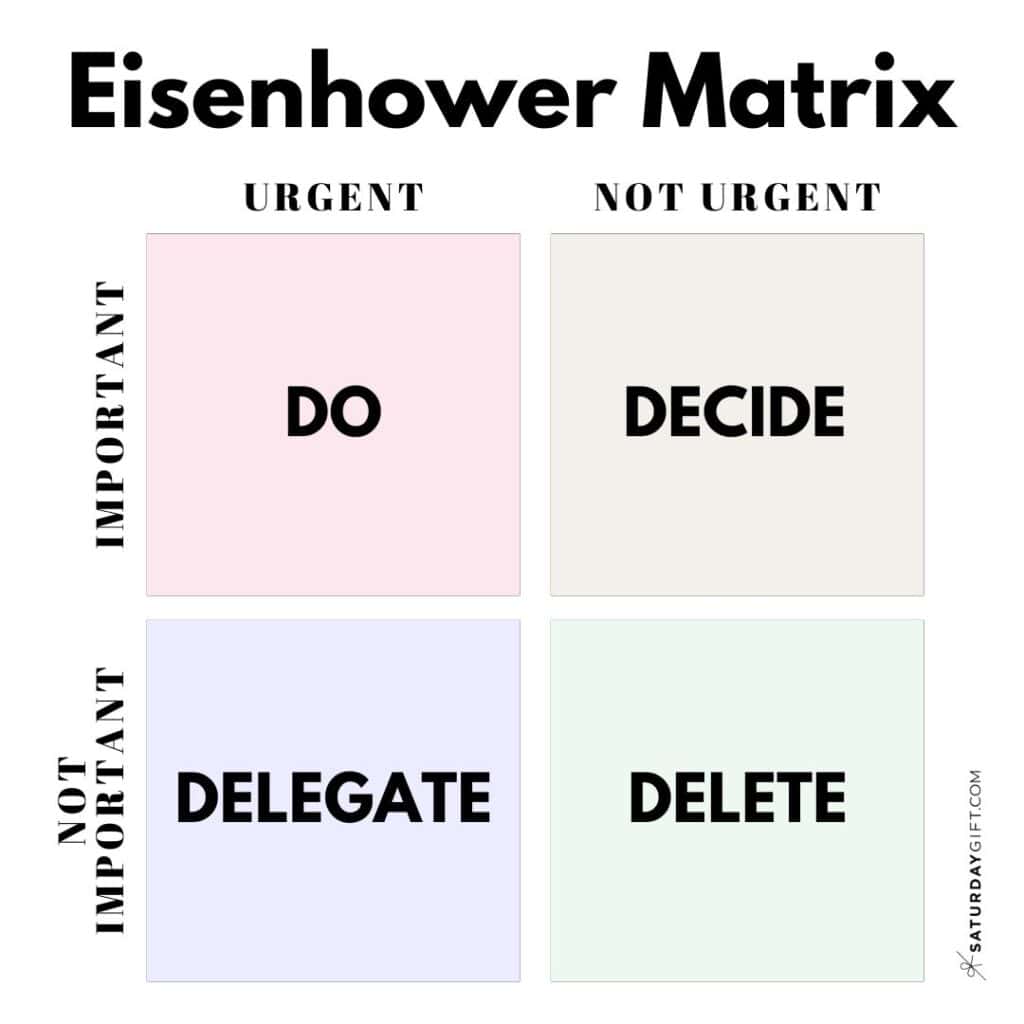
The Eisenhower Matrix (also known as the Urgent-Important Matrix or Eisenhower Box) helps you decide what deserves your immediate attention and what can wait for later.
It’s a simple yet powerful time management tool that turns an overwhelming to-do list into four clear categories, helping you see what’s truly important — and what’s just keeping you busy.
By separating urgent and important tasks from those that are less meaningful, the Eisenhower Matrix gives you a clear overview of where your time and energy should go.
It’s a calm, thoughtful way to stay organized, reduce stress, and make steady
Understanding Urgency and Importance
Before you use the matrix, it helps to understand the difference between urgent and important tasks.
- Urgent tasks are time-sensitive tasks that need immediate action. They make you feel pressured — like paying bills, responding to urgent issues, or returning a call from your family doctor.
- Important tasks are meaningful — the ones that lead to long-term payoffs, growth, and satisfaction. They’re things like professional development, strategic planning initiatives, maintenance projects, and quality time with family.
But here’s the problem: we tend to confuse the two. We often feel productive when we’re busy tackling urgent items, even if they’re unimportant tasks.
This is called the mere urgency effect — when people spend time on things that feel urgent instead of what truly matters.
The Four Quadrants of the Eisenhower Matrix
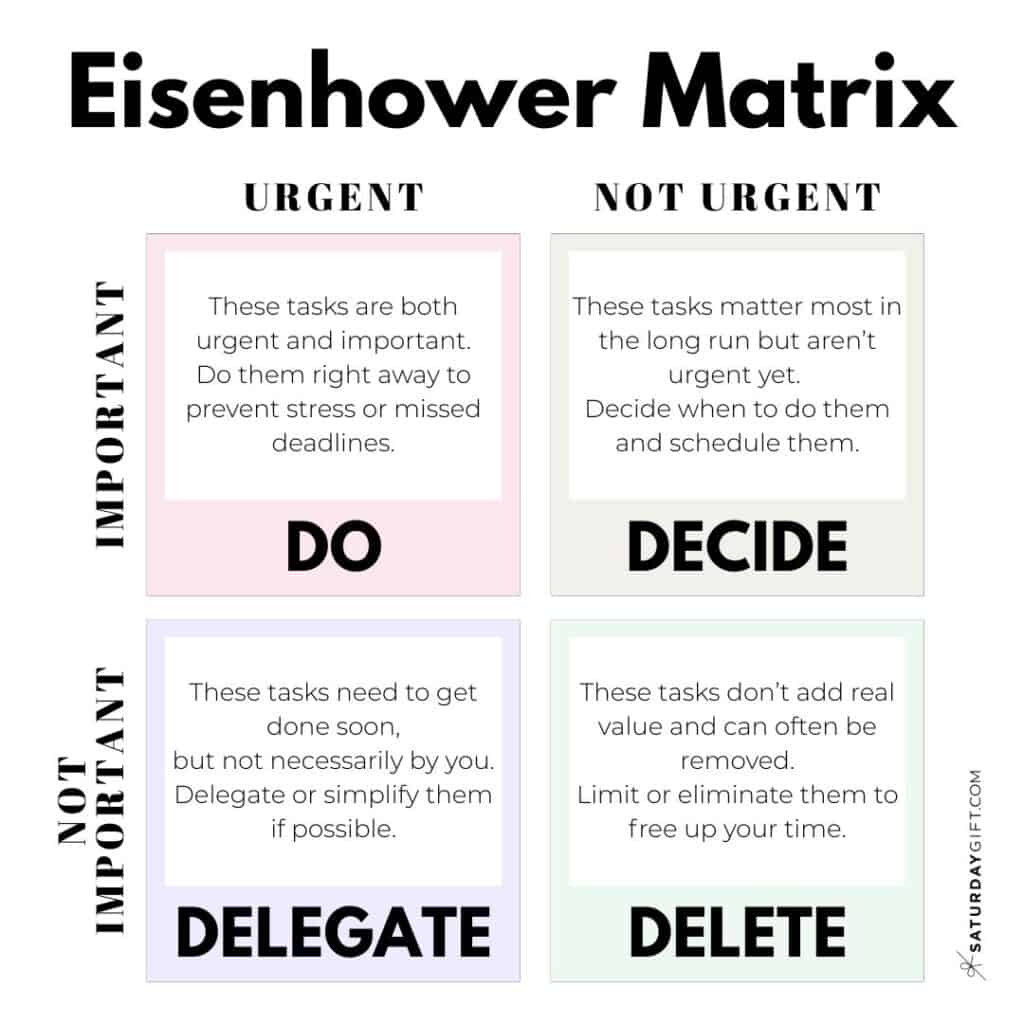
The matrix divides your task list into four quadrants — or four boxes — based on urgency and importance.
Each quadrant represents a different strategy for completing tasks and improving your personal productivity.
Quadrant 1: Do First (Urgent + Important)
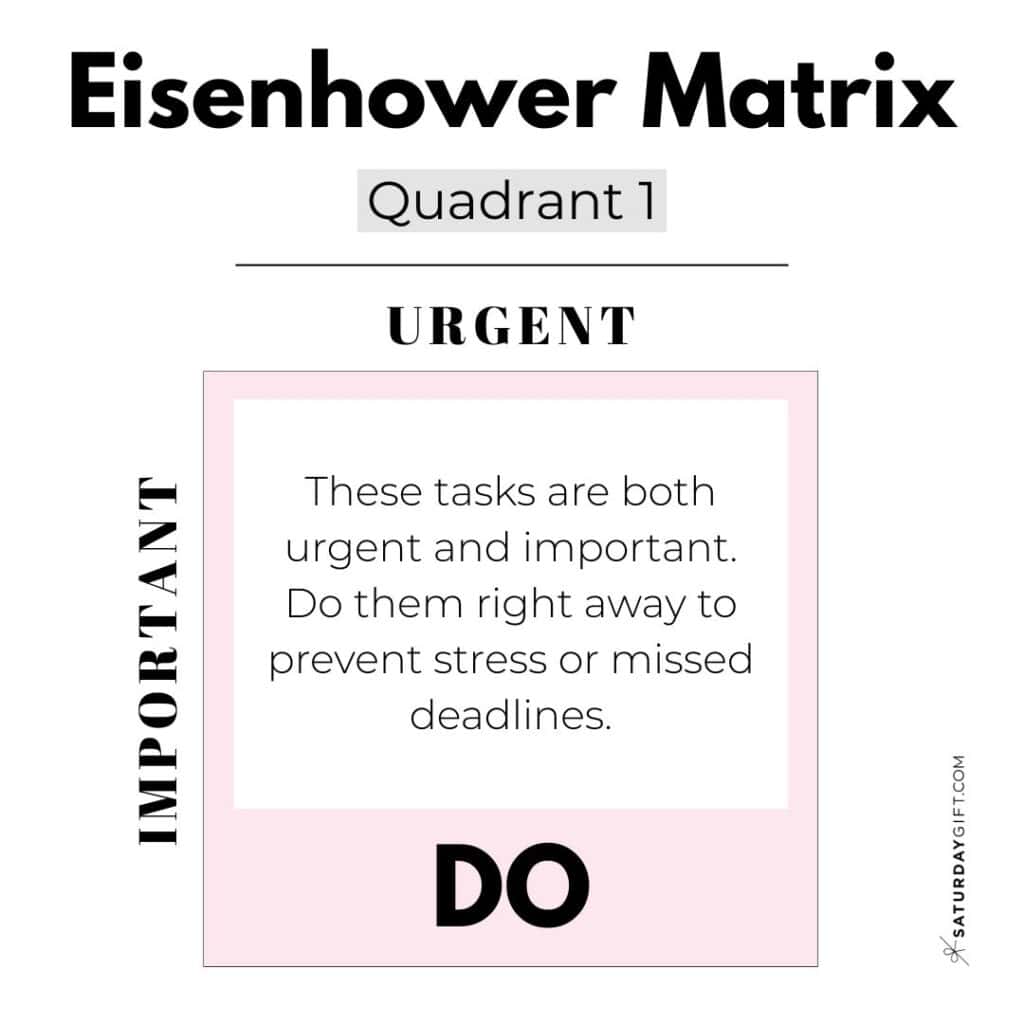
The upper left quadrant is for urgent and important tasks — the true must-dos — things that can’t wait and require your immediate attention and have real consequences if you ignore them.
These are the urgent matters you simply can’t delay, like urgent present problems or time-sensitive deadlines.
Examples:
- Paying a bill that’s due today
- Fixing something that’s broken and essential
- Meeting a work or school deadline
- Helping a family member during an emergency
💡 Tip: If you spend too much time in this urgent and important category, you’ll feel stressed and overworked. If everything feels urgent, it might be time to plan ahead or set boundaries.
Quadrant 2: Decide When (Important but Not Urgent)
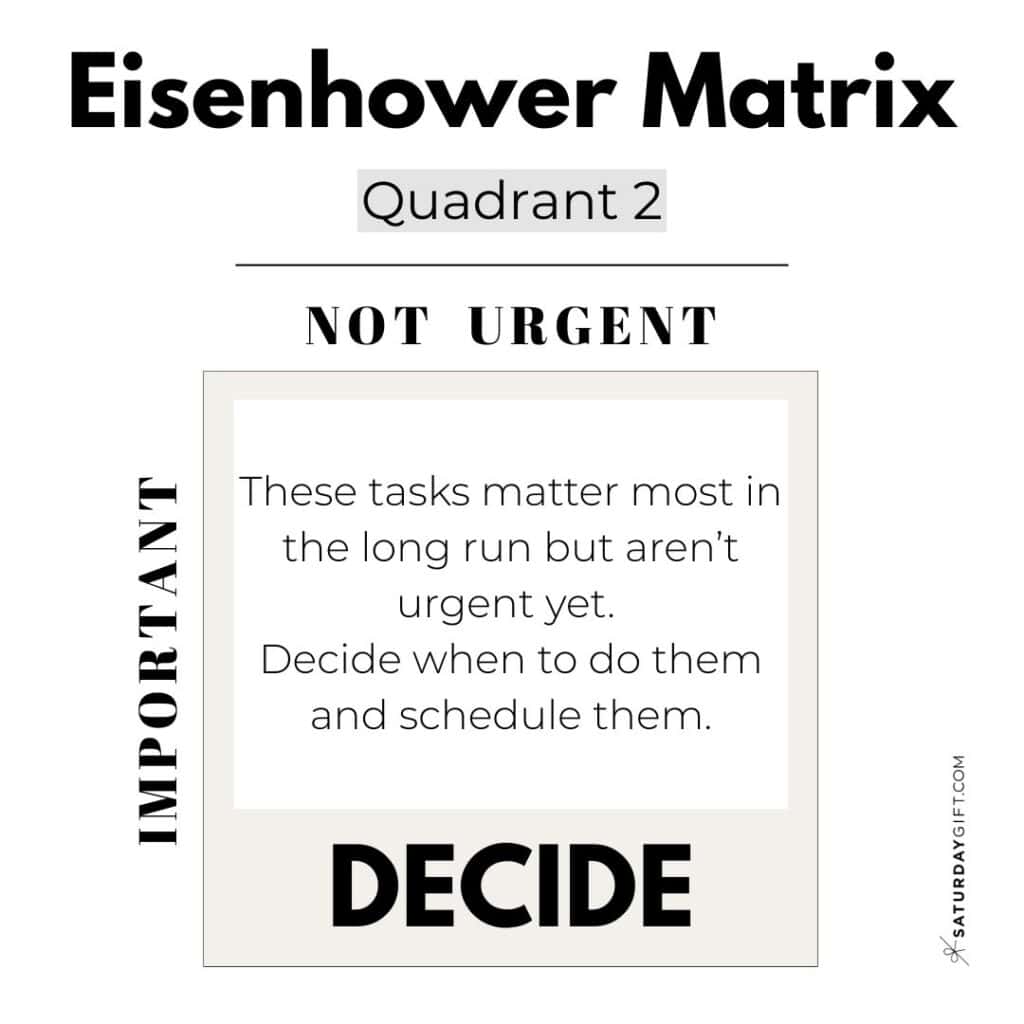
The upper right quadrant contains important but not urgent tasks — the meaningful activities that move you toward your goals but don’t have immediate deadlines.
This is where the magic happens — and where most productive, calm people spend the majority of their time.
This is the important category that helps you grow, feel balanced, and stay proactive instead of reactive.
Examples:
- Creating a long-term plan or goal
- Investing time in professional development
- Exercising or caring for your health
- Spending time with loved ones
- Working on larger projects with long deadlines
People spend too little time here, even though this is where true progress happens. When you use the Eisenhower Matrix well, most of your energy goes here — on the important but not urgent tasks that make life smoother and more fulfilling.
💡 Tip: Schedule these activities like appointments — and protect them. They’re easy to postpone, but they’re what truly make your days smoother and more joyful.
Quadrant 3: Delegate or Simplify (Urgent but Not Important)
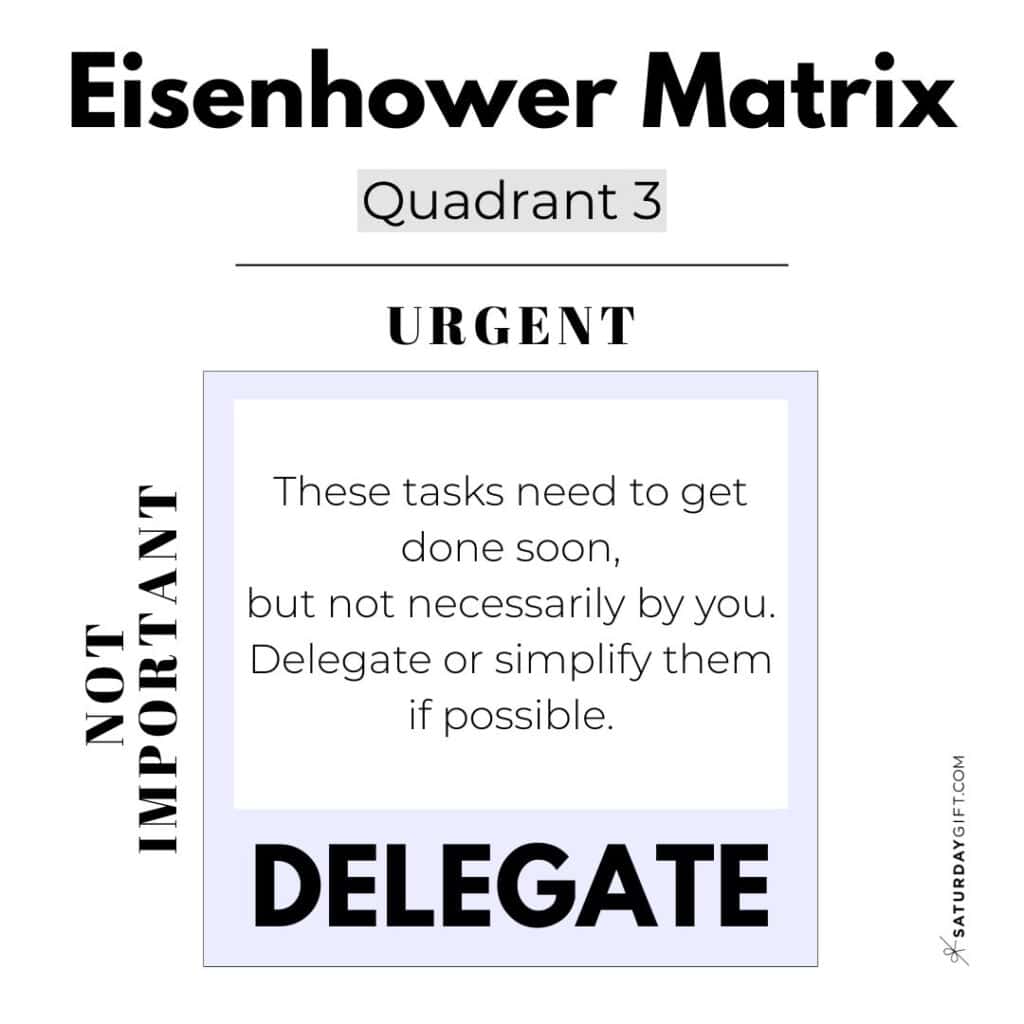
This section covers urgent but unimportant tasks — things that demand your attention but don’t really require you. They’re tasks that feel pressing but don’t really require your time or energy.
They often come from someone else’s sense of urgency and priorities.
Examples:
- Sorting routine emails
- Attending meetings that could’ve been emails
- Doing errands someone else could help with
- Handling minor interruptions or favors
💡 Tip: Delegate tasks or simplify them. Try batching low priority work — like replying to non-essential emails — during quieter parts of your day. Batch these tasks into one “admin block.” That way, they won’t interrupt your focus on what truly matters.
Quadrant 4: Delete or Limit (Neither Urgent nor Important)
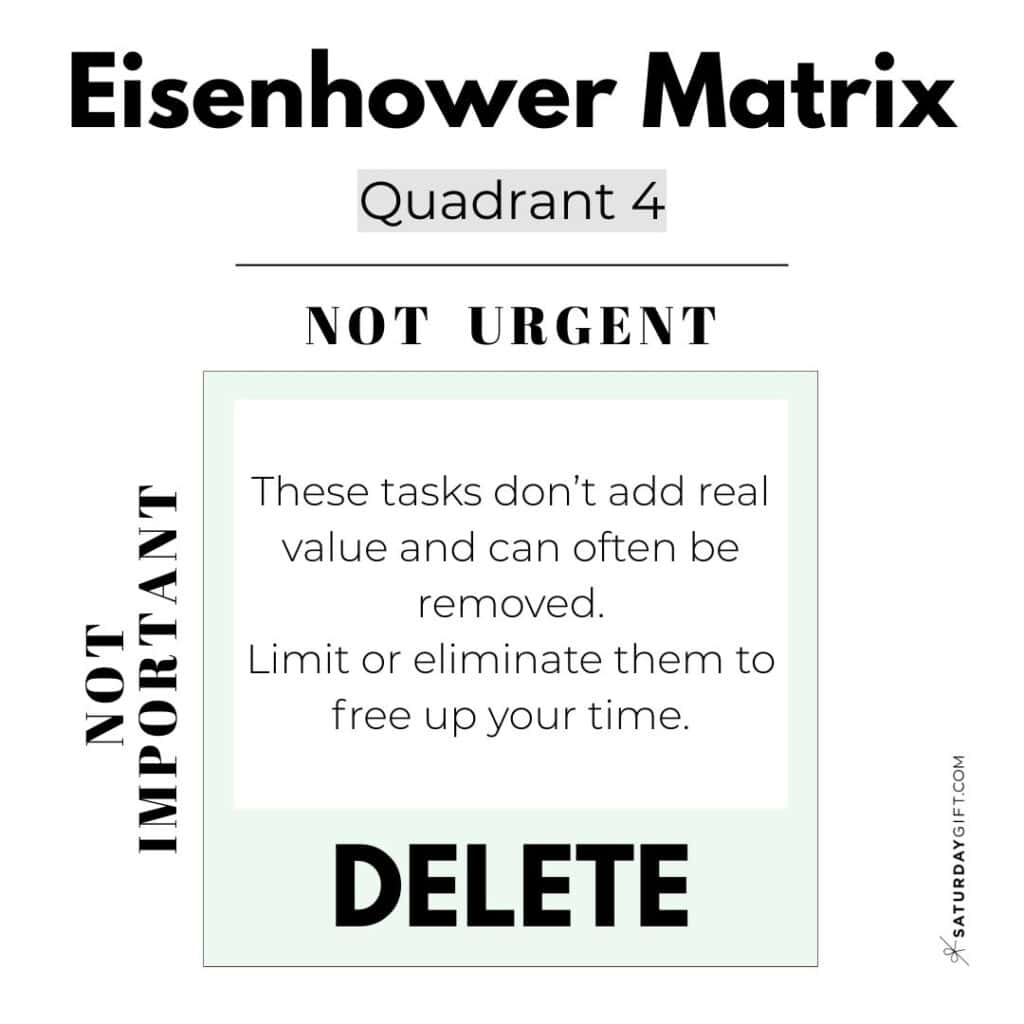
The fourth quadrant contains unnecessary tasks — these are the time-fillers!
They’re things that don’t add value and can quietly steal your time. These time-wasting activities distract you from what matters. They’re not bad in small doses, but they can easily eat up hours without giving much back.
Examples:
- Over-organizing something that’s already fine
- Scrolling social media mindlessly
- Watching random shows you don’t enjoy or binge-watching aimlessly
- Doing busywork that doesn’t help anyone (like rewriting meeting notes or to do lists instead of taking action)
💡 Tip: Not all downtime is bad! Relaxation is important — but unimportant tasks and unnecessary tasks should never take over your days. Real rest — like reading,
How to Use the Eisenhower Matrix in Everyday Life
You don’t need an app or complex task management system to make this work — a printable Eisenhower Box (or even a notebook) is perfect.
- Write down all your everyday tasks.
- Include home, work, and personal things — anything on your to-do list.
- Sort them into quadrants.
- Ask: “Is this urgent and important, important but not urgent, urgent but not important, or neither?”
- Take action:
- Do first: Handle the urgent and important category immediately.
- Decide when: Schedule time for important but not urgent work.
- Delegate: Hand off urgent but unimportant tasks.
- Delete: Remove or limit unnecessary tasks.
- Review weekly.
- Circumstances change — so should your time management approach.
💡 Tip: The key is to first get familiar with the Eisenhower Matrix principles — and then, whenever a new task comes up or someone asks for your help, you can instantly recognize which box it belongs in.
For example, if someone says, “Can you bake a cake for the event?” but your week is already bursting at the seams, it’s perfectly okay to say no — or simply buy the cake and bring it instead.
Simple Tips to Make It Work
✨ Limit how many tasks go in each box. Too many tasks make it harder to focus.
✨ Invest time in important but not urgent activities — they prevent future stress.
✨ Batch similar tasks. It’s an easy way to simplify task management.
✨ Say no gracefully. Protecting your time is self-care, not selfishness.
Why the Eisenhower Matrix Helps So Much
The Eisenhower Matrix helps you:
- Focus on the important tasks that create long-term success
- Avoid low priority and time-wasting activities
- Spend less time firefighting and more on strategic planning initiatives
- Reduce stress and stay proactive
- Balance urgent issues with your important future
It’s one of the most effective ways to manage time-sensitive tasks, delegating tasks, and keeping your to-do lists under control — all while staying calm and productive.
Even Harvard Business Review notes that people who focus more on the important but not urgent quadrant experience higher personal productivity and lower stress.
The Story Behind the Eisenhower Matrix
The Eisenhower Matrix was named after President Dwight D. Eisenhower, a five-star general who led the Allied Forces during World War II and later became the President of the United States.
Eisenhower was known for handling countless urgent matters, from the Cold War to creating the interstate highway system, while still focusing on the nation’s important future.
He once said: “What is important is seldom urgent, and what is urgent is seldom important.”
That quote inspired author Stephen Covey to include the Eisenhower Decision Matrix in his best-selling book, The 7 Habits of Highly Effective People — turning it into one of the most famous task management frameworks of all time.
A Gentle Reminder 💛
You don’t have to do everything.
Just the right things.
When you start to use the Eisenhower Matrix, you’ll notice how clear your priorities become.
Even one small change — like scheduling time for yourself or a maintenance project — can shift your days from chaotic to calm.
You’ve got this — one thoughtful, important task at a time.
Free Printable Eisenhower Matrix Templates
Ready to get started?
Download your free printable Eisenhower Matrix templates from this post — available in both landscape and portrait layouts.
They’re perfect for organizing your everyday tasks, long deadlines, or larger projects.
POST: Eisenhower Matrix Templates — 26+ Free Printable Designs
Pin it!